Fixed expenses: examples, a full list and how to lower them
- Fixed expenses are costs that come back on a regular schedule at the same or nearly the same amount, no matter how you spend the rest of the month: rent, insurance, loan payments and subscriptions.
- Variable expenses such as groceries, gas and eating out change from month to month and depend on your everyday choices.
- Lowering a fixed expense saves money every month without any extra effort. Review your plans and subscriptions once a year.
Fixed expenses are the part of your spending you think about least, because they are paid without you doing anything. That is exactly why they deserve a closer look. This guide explains what counts as a fixed expense, how to tell fixed from variable costs, and where lowering them pays off most.
What fixed expenses are
Fixed expenses are costs that come back on a regular schedule at the same or nearly the same amount, however much you shop or go out that month. Most of them run through a contract, a lease or autopay. In the short term you can hardly change them; they only go down when you cancel, switch or renegotiate.
That is what sets them apart from variable expenses. How much you spend on groceries, gas or takeout is something you decide again every week. This is why variable expenses belong in a budget log you update as you go, while fixed expenses go into your monthly plan once and get reviewed now and then.
Fixed expenses list: typical costs in a household
This list covers the most common fixed expenses. Not every item applies to every household.
Housing
- Rent or mortgage payment
- Renters or homeowners insurance
- Property taxes, if you pay them separately from the mortgage
- HOA fees
Transportation
- Car payment or lease
- Car insurance
- Transit pass
Insurance and health
- Health insurance premiums you pay yourself
- Life or disability insurance
Debt payments
- Student loan payments
- Personal loan payments
- Minimum payments on credit cards you are paying off
Plans and subscriptions
- Phone plan
- Internet
- Streaming services, music and apps
- Gym membership
Family
- Childcare or tuition
- Child support
Utilities such as electricity, gas and water are a special case: they come every month, but the amount changes with the season. For your plan, use the average of the last twelve months, or ask whether your provider offers budget billing with a fixed monthly amount.
Fixed vs variable expenses
The quickest test is a question: would this cost change if you had a frugal month? If not, it is a fixed expense.
| Fixed expenses | Variable expenses | |
|---|---|---|
| Amount | The same or nearly the same every time | Changes from month to month |
| How you pay | Usually autopay | Card or cash, as you go |
| How to lower it | Cancel, switch or renegotiate | Change everyday habits |
| Examples | Rent, insurance, loan payments | Groceries, gas, eating out |
A rough rule of thumb many budgets use is the 50/30/20 split: about half of your take-home pay for needs, 30 percent for wants and 20 percent for savings. Your fixed expenses make up most of the needs share. If they already take more than half your income on their own, that is the first place to look.
Don’t forget yearly and quarterly bills
Some fixed costs do not come every month: car insurance paid once or twice a year, an annual software subscription, a membership or property taxes. These are the bills that catch a budget off guard.
The fix is simple arithmetic. Add up all yearly amounts, divide by twelve and set that amount aside every month, ideally in a separate savings account. A $1,200 car insurance premium becomes $100 a month, and a $120 annual subscription becomes $10.
How to lower your fixed expenses
Every dollar you cut from a fixed expense is saved again every month, without any willpower. That makes fixed costs the most effective place to start.
- List everything once. Go through three months of bank and card statements and write down every recurring payment with its amount and due date.
- Cancel what you no longer use. Subscriptions and memberships tend to pile up. Anything you have not used in the last two months is a candidate.
- Compare and switch. Phone, internet and insurance are often cheaper with another provider or another plan with the same provider.
- Ask for a better rate. Calling your provider and asking for a lower rate or a loyalty discount takes a few minutes and works more often than you might think.
- Review once a year. Put a date in your calendar, for example in January, and go through the list again.
Keeping track in the app
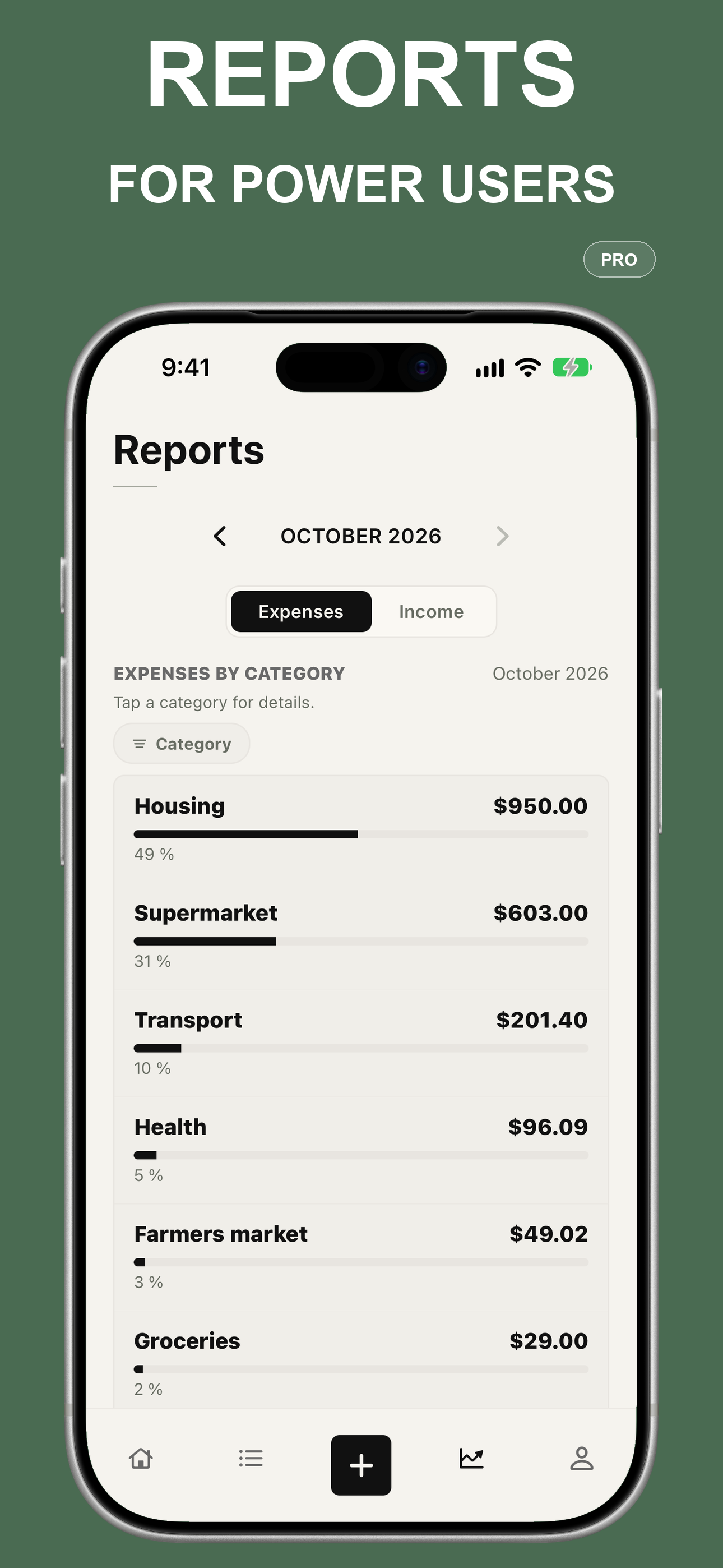
Haushaltsbuch & Budget Planner is a household budget app for iPhone that works without a bank login. You record income and expenses with a category, choose your currency and see the month’s income, spending and balance. With Pro, the reports show how your spending splits across categories, so you can see what share your fixed costs take.
Once your fixed expenses are under control, the next step is the flexible spending. The guide to envelope budgeting shows a simple way to keep groceries, eating out and other variable costs within a limit.
A look at the app
Frequently asked questions
What are fixed expenses?
+
Fixed expenses are costs that come due on a regular schedule at the same or a similar amount, and that you can hardly change in the short term. Typical examples in a household are rent or a mortgage payment, insurance premiums, car and student loan payments, your phone and internet plan, and subscriptions.
What is the difference between fixed and variable expenses?
+
Fixed expenses stay the same whatever you do during the month, and they are usually paid by autopay. Variable expenses change with your choices, for example groceries, gas, clothes and eating out.
Are groceries a fixed expense?
+
No. You buy groceries every month, but the amount depends on what you buy, so they count as a variable expense. In a 50/30/20 budget they still belong to the needs share, together with your fixed bills.
Are utilities fixed or variable?
+
Usually somewhere in between. Electricity, gas and water bills come every month, but the amount changes with the season and your usage. Many budgets treat them as fixed and plan with the average of the last twelve months. Some utilities offer budget billing, which turns the bill into a fixed monthly amount.
How do I budget for yearly or quarterly bills?
+
Divide the yearly amount by twelve and set that aside every month. A car insurance premium of $1,200 a year means $100 a month. When the bill arrives, the money is already there.
Keep reading
 Christmas budgetPlan holiday spending without a January surprise
- Envelope budgetingHow the cash envelope system works

 Test on Android