Envelope budgeting: how the cash envelope system works
- With envelope budgeting, you split the money for your flexible spending into one envelope per category at the start of the month. When an envelope is empty, that category is done for the month.
- Cash makes the limit visible. Digitally, the same idea works with separate savings buckets or a budget log where you compare what you planned with what you spent.
- Bills stay in your checking account. Envelopes are only for the everyday spending you decide on as you go, such as groceries, eating out and clothes.
Envelope budgeting is one of the oldest budgeting methods around: money goes into labeled envelopes, and what is in an envelope is what you can spend. That is all. The simplicity is exactly why it still works. This guide shows how to set it up, how to run it when you rarely pay with cash, and how to keep it going past the first month.
How envelope budgeting works
The idea fits in one sentence: at the start of the month you divide the money for your flexible spending, and in each category you only spend what is in its envelope. When the envelope is empty, that category is done until next month.
It works because the limit becomes visible. In a checking account, rent, groceries and takeout blur into one balance. An envelope shows at a glance how much is left for groceries, on the 12th just as clearly as on the 28th.
One rule matters from the start: your fixed expenses do not go into envelopes. Rent, insurance and your phone plan keep running from your account by autopay. Envelopes are only for the categories where you make spending decisions every week.
Set it up in 5 steps
- Choose your categories. Start with three to five envelopes for flexible spending, for example groceries, eating out, household items, entertainment and clothes.
- Set an amount for each. Look at your bank statements or your budget log to see what you spend in these categories now, and set a monthly amount for each envelope. What is left after bills and savings is the ceiling for all envelopes together.
- Fill the envelopes. Take the total out at the start of the month, or on each payday, and split it between the labeled envelopes.
- Pay only from the envelope. Take the matching envelope when you shop, or just the amount you plan to spend. Avoid paying by card in these categories, or the limit stops working.
- Review at the end of the month. Note which envelopes lasted and which did not, and adjust the amounts for next month.
An empty envelope is not a failure. It tells you that the budget was too tight, or that this is a category worth a closer look.
Digital envelope budgeting
Plenty of people hardly use cash anymore. The idea still works, the envelopes just look different:
- Savings buckets. Many banks let you create named buckets, goals or sub-accounts. At the start of the month you move each budget into its bucket and spend from the matching one.
- A budget log with a plan. You set an amount per category and record every expense with its category. Before a bigger purchase, you check how much of that category you have already spent.
The digital version is more convenient, but the limit is easier to ignore. A paper envelope gets visibly thinner; a number on a screen does not. Checking in once a week keeps the digital version honest.
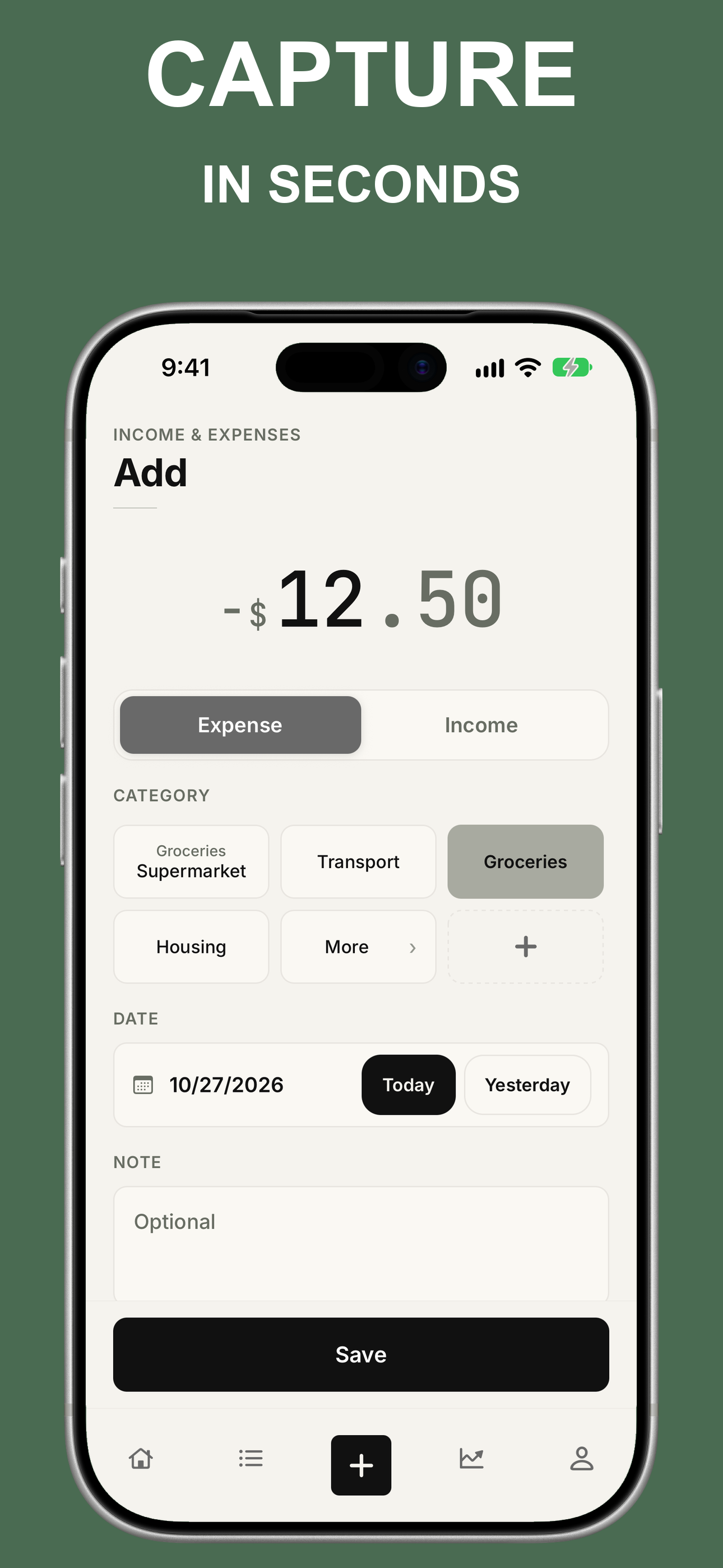
Haushaltsbuch & Budget Planner does not have category budgets or spending limits. You record expenses with a category as they happen and see the month’s income, spending and balance; with Pro, the reports show how your spending splits across categories. You keep the planned amount per envelope yourself, for example on a sticky note or in a spreadsheet, and compare it with the app at the end of each week.
Common mistakes and how to avoid them
- Too many envelopes. Ten envelopes are hard to manage in everyday life. Start with a few and split them later if you need to.
- Amounts that are too tight. A strict first month is the fastest way to quit. Plan realistically first, then lower the amounts step by step.
- Refilling from your account. When an envelope runs out, move money over from another envelope. Topping up from checking removes the limit.
- Forgetting irregular costs. Gifts, car repairs and doctor’s bills do not come every month. One envelope for these keeps them from wrecking the others; true emergencies belong to your emergency fund.
You will know after two or three months whether envelope budgeting suits you. If it makes your day-to-day spending calmer, it has done its job, whether you use paper envelopes or none at all.
A look at the app
Frequently asked questions
How do I start envelope budgeting?
+
Pick three to five flexible spending categories, for example groceries, eating out and household items. Set a monthly amount for each, take that amount out at the start of the month and put it in labeled envelopes. In those categories, you only pay from the matching envelope.
Does the envelope system work without cash?
+
Yes. Many banks let you create named savings buckets or sub-accounts, and you move each budget there at the start of the month. You can also keep a budget log and compare each category's spending with the amount you planned. The limit is less tangible that way, so check where you stand before bigger purchases.
What happens to money left in an envelope at the end of the month?
+
Decide that before the month starts. A common choice is to move leftovers to savings. You can also roll them into next month, for example to save up for a bigger purchase in that category.
What if an envelope runs out before the month ends?
+
Move money over from another flexible envelope, not from your checking account and not from your emergency fund. Your total budget stays the same, and next month you know which category needs more.
Which categories should get an envelope?
+
The ones where your spending changes from week to week and where you tend to lose track: groceries, eating out, entertainment, clothes and gifts are typical. Rent, insurance and other fixed bills do not need an envelope because they cost the same every month.
Keep reading
 Christmas budgetPlan holiday spending without a January surprise
- Fixed expensesExamples, a full list and how to lower them

 Test on Android