Christmas budget: how to plan holiday spending without a January surprise
- Set one total for the holidays first, then split it into gifts, food, travel, decorations and a buffer.
- The number of gifts usually matters more than their price. A Secret Santa or the four-gift rule keeps the list short.
- Record every holiday purchase right after you pay, so you see what is left in December and not on your January statement.
December brings a lot of spending at once: gifts, holiday meals, travel to family, decorations and wrapping paper. Each purchase seems manageable on its own, and together they often only show up on the January statement. This guide shows how to plan a Christmas budget, how to buy fewer gifts without anyone feeling shortchanged, and how to keep track while December is still going.
Set the total first, then make the list
Many holiday budgets are built backwards: first comes the gift list, then the adding up. The other way around is easier to stick to. Start with how much is left for the holidays once rent, your other fixed expenses and your usual savings are covered. That total is your frame.
If you tracked your spending last year, last December is your best guide. It shows what the holidays actually cost you, not what you planned back then.
If the total feels too small, spread it out. Divide it by the months left until December and set that amount aside every month. Starting in October with $600 in mind means $200 a month, which is easier than $600 in one go.
Split your holiday spending into a few categories
Divide the total into a handful of broad categories. Five are usually enough:
- Gifts for family, friends and coworkers
- Food and drinks for holiday meals, guests and parties
- Travel to see family, by car, train or plane
- Decorations and extras such as a tree, lights, wrapping paper and shipping
- A buffer for what comes up every year
An example with a $600 total: $300 for gifts, $150 for food, $80 for travel, $40 for decorations and $30 as a buffer. The numbers are only there to show the arithmetic; what matters is that each category has a limit before the first purchase.
A category without a limit is not a budget, it is a hope. Even rough numbers make it easier to say no in the store.
Buy fewer gifts, not just cheaper ones
Gifts are usually the biggest lever, and the number of gifts matters more than the price of each one. Two simple ways to keep the count down:
- The four-gift rule. Each person gets four gifts: something they want, something they need, something to wear and something to read. It works especially well for children.
- A Secret Santa. Everyone draws one name and buys one gift, with a price limit you agree on together. In a group of eight, buying everyone a $20 gift costs $140 per person; a Secret Santa with a $30 limit costs $30, and the one gift can even be a little nicer.
A Secret Santa is a group decision. Bring it up early, ideally before anyone has started shopping, and agree on an amount that is comfortable for everyone. You do not need slips of paper or a meeting for the draw: Wichteln.link (opens in a new tab), which is also made by KimaraCode, lets you enter the names, share one link in your group chat and have everyone draw their own name. It is free and needs no account.
Track holiday spending as you go
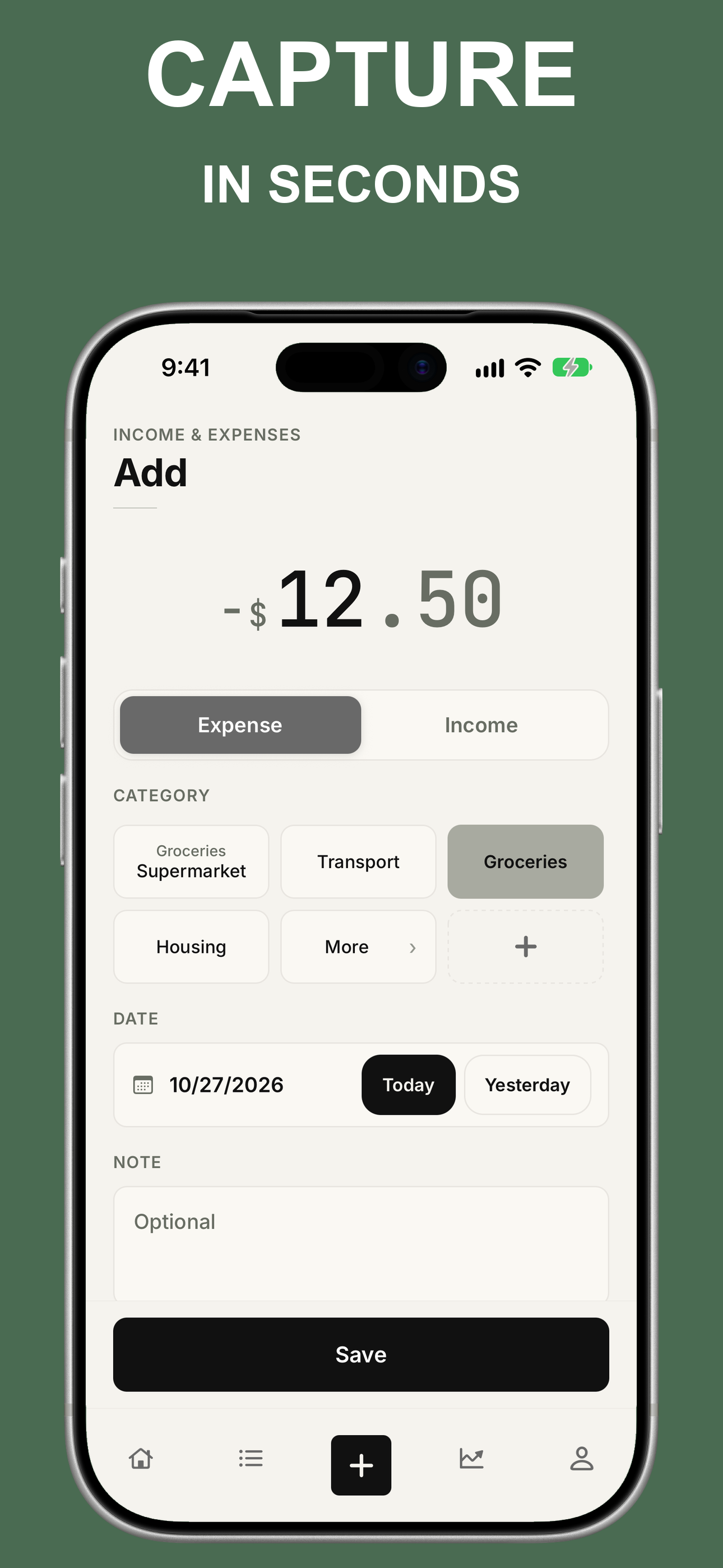
A plan only helps if you can see where you stand during December. Record every holiday purchase right after you pay: amount, category, done. That goes double for cash at markets and parties, which otherwise never shows up anywhere.
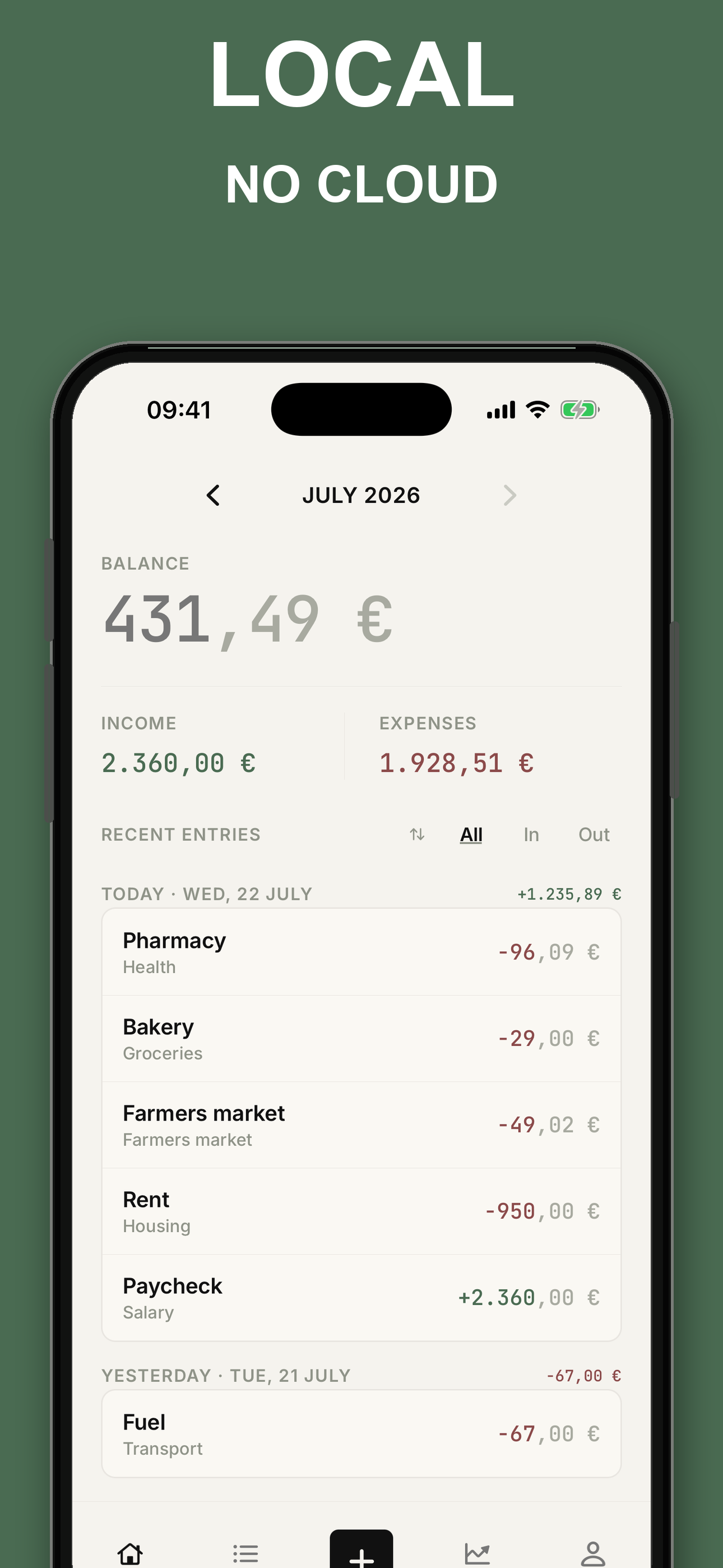
Haushaltsbuch & Budget Planner is a budget app for iPhone where you record expenses with a category and a date, without a bank login and without an account. The monthly overview shows income, spending and what is left. That way you notice in mid-December that the gift budget is used up, not when you open your statement in January.
Take ten minutes after the holidays
In early January, take ten minutes to compare the plan with what actually happened. Which category ran over, and which one was planned too generously? Write it down for next year. Then your next holiday budget does not start from zero but with real numbers from your own December.
If you want a simple way to keep groceries and other everyday spending in check for the rest of the year, the guide to envelope budgeting is a good next step.
A look at the app
Frequently asked questions
How much should I spend on Christmas?
+
There is no right amount for everyone. A good starting point is what is actually left in November and December after rent, your other fixed expenses and your usual savings. If you tracked your spending last year, last December shows where you really ended up.
What is the four-gift rule?
+
It limits each child, or each person, to four gifts: something they want, something they need, something to wear and something to read. Some families add a fifth, something to do or share. It keeps the gift list short and makes each gift more deliberate.
Does a Secret Santa really save money?
+
In larger groups, usually yes, because everyone buys one gift instead of one for each person. In a group of eight, buying everyone a $20 gift costs $140 per person. With a Secret Santa and a $30 limit, it costs $30. How much you save depends on your group and the limit you agree on.
When should I start saving for Christmas?
+
The earlier the better, because a smaller amount each month is easier than one big hit in December. Divide your holiday total by the number of months left and set that aside every month, ideally in a separate savings account.
Keep reading
 Envelope budgetingHow the cash envelope system works
- Fixed expensesExamples, a full list and how to lower them

 Test on Android